
Introduction
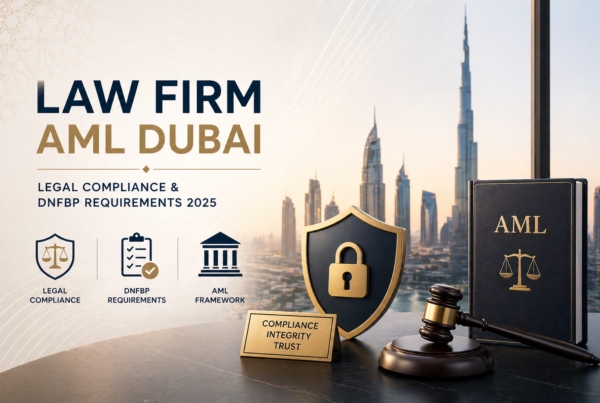
The Dubai real estate market is one of the most dynamic in the world, attracting investors from across the globe. But with high-value transactions and international buyers comes significant money laundering risk. The Dubai Land Department (DLD) and Ministry of Economy have implemented strict Anti-Money Laundering (AML) requirements for real estate agents, brokers, and property developers.
Whether you’re a real estate agent in Downtown Dubai, a brokerage in Dubai Marina, or a property developer, understanding AML compliance is critical for your license and reputation.
This guide covers everything real estate professionals need to know about AML compliance in Dubai.
—
Why Real Estate is High Risk for Money Laundering
Attractive to Criminals
Real estate offers money launderers several advantages:
- High value: Large transactions move significant funds
- Legitimate asset: Property appears as legitimate investment
- Complex ownership: Shell companies and trusts obscure true owners
- Price manipulation: Over/under invoicing possible
- Cash acceptance: Some markets accept large cash payments
Dubai-Specific Risks
- International buyers: 70%+ of buyers are foreign
- High-value market: Luxury properties worth millions
- Off-plan sales: Complex payment structures
- Freehold areas: Foreign ownership allowed
- Rapid transactions: Quick buying and selling
—
Real Estate AML Regulations in Dubai
Regulatory Framework
Ministry of Economy (MOE):
- Oversees real estate agents and brokers as DNFBPs
- Requires AML compliance programs
- Conducts inspections and enforcement
Dubai Land Department (DLD):
- Property registration authority
- Transaction oversight
- Compliance requirements for registered brokers
Central Bank of UAE (CBUAE):
- goAML platform for suspicious transaction reporting
- Financial sector coordination
- Sanctions compliance
Key Legislation
Federal Decree-Law No. 20/2018:
- Applies to all DNFBPs including real estate
- Customer due diligence requirements
- Suspicious transaction reporting
- Record keeping obligations
Cabinet Decision No. 10/2019:
- Implementing regulations
- Specific requirements for real estate
- Penalties for non-compliance
—
Core AML Requirements for Real Estate
1. Customer Due Diligence (CDD)
Required for All Transactions:
- Buyer identification and verification
- Seller identification and verification
- Beneficial owner identification
- Source of funds verification
- Purpose of transaction
Documentation Required:For Individuals:
- Passport or Emirates ID
- Proof of address
- Source of funds documentation
- Occupation and income source
For Corporate Buyers:
- Trade license
- Certificate of incorporation
- Articles of association
- Beneficial ownership declaration
- Board resolution
- Authorized signatory ID
2. Enhanced Due Diligence (EDD)
Required for:
- Cash transactions ≥ AED 55,000
- Politically Exposed Persons (PEPs)
- High-risk jurisdictions
- Complex ownership structures
- Unusual transaction patterns
Additional Measures:
- Senior management approval
- Enhanced source of funds verification
- Ongoing monitoring
- Additional documentation
3. Record Keeping
Retention Period: 5 yearsRecords to Maintain:
- Customer identification documents
- Transaction records
- Correspondence
- Risk assessments
- STR filings (if any)
4. Suspicious Transaction Reporting (STR)
goAML Platform:
- All STRs submitted electronically
- Immediate reporting for terrorism financing
- Timely reporting for other suspicions
- No tipping-off to customer
Red Flags for Real Estate:
- Buyer has no apparent connection to property
- Unusual payment methods (large cash, third-party payments)
- Price doesn’t match market value
- Rapid resale without clear reason
- Complex ownership structures without justification
- Reluctance to provide documentation
—
Cash Transaction Reporting
AED 55,000 Threshold
Requirement:
- Cash payments ≥ AED 55,000 must be reported
- Applies to single or linked transactions
- Includes cash equivalents (travelers checks, etc.)
Reporting Process:
- Report via goAML platform
- Maintain detailed records
- Enhanced due diligence required
Best Practices for Cash Handling
- Avoid cash where possible
- Use banking channels
- Document all cash transactions
- Report as required
- Enhanced scrutiny for cash deals
—
Implementing AML in Real Estate Operations
Step 1: Risk Assessment
Assess Your Business:
- Types of properties handled
- Client demographics
- Transaction values
- Geographic exposure
- Payment methods accepted
Risk Categories:
- Low Risk: Local buyers, bank transfers, standard properties
- Medium Risk: International buyers, high-value properties
- High Risk: Cash transactions, PEPs, complex structures
Step 2: Policies and Procedures
Required Documentation:
- AML policy statement
- Customer identification procedures
- Risk assessment procedures
- STR procedures
- Record keeping procedures
Step 3: Staff Training
Training Requirements:
- Initial training for all staff
- Annual refresher training
- Role-specific training
- Red flag awareness
- STR procedures
Step 4: Technology Solutions
Recommended Systems:
- Customer verification platform
- Sanctions screening
- Document management
- Case management for STRs
- Audit trail systems
—
Common AML Challenges in Dubai Real Estate
Challenge 1: International Buyers
Issue: Buyers from 190+ countries, varying documentation standards.
Solution:
- Standardized verification procedures
- Translation services
- Enhanced due diligence for high-risk jurisdictions
- Third-party verification services
Challenge 2: Off-Plan Sales
Issue: Complex payment schedules, developer financing, delayed registration.
Solution:
- Monitor payment patterns
- Verify developer legitimacy
- Track ownership changes
- Enhanced monitoring
Challenge 3: Complex Ownership
Issue: Offshore companies, trusts, nominee arrangements.
Solution:
- UBO identification requirements
- Enhanced documentation
- Legal consultation
- Risk-based approach
Challenge 4: Rapid Transactions
Issue: Quick buying and selling, flipping, no apparent business purpose.
Solution:
- Monitor transaction patterns
- Enhanced scrutiny for rapid sales
- Source of funds verification
- STR if suspicious
—
Penalties for Non-Compliance
Ministry of Economy Enforcement
Administrative Penalties:
- Fines: AED 50,000 to AED 5,000,000
- License suspension
- License revocation
- Public naming
Criminal Penalties:
- Imprisonment for serious violations
- Personal liability for compliance officers
- Reputational damage
Recent Enforcement
The Ministry of Economy has intensified inspections:
- Regular audits of real estate brokerages
- Mystery shopping exercises
- Documentation reviews
- STR filing audits
—
Best Practices for Real Estate Agents
1. Know Your Customer
Verify:
- Identity (passport, Emirates ID)
- Address
- Source of funds
- Business purpose
- Beneficial owners
2. Document Everything
Maintain Records:
- All identification documents
- Correspondence
- Risk assessments
- Transaction details
- STR decisions
3. Trust Your Instincts
Red Flags:
- If something feels wrong, investigate
- Don’t proceed if uncomfortable
- Escalate to compliance officer
- File STR if suspicious
4. Stay Updated
Keep Current:
- Regulatory changes
- New typologies
- Enforcement trends
- Industry best practices
—
Tracefort for Real Estate
Tracefort provides AML solutions tailored for Dubai real estate:
Customer Verification
- ID document verification
- Sanctions screening
- PEP identification
- UBO verification
Transaction Monitoring
- Payment pattern analysis
- Risk scoring
- Alert management
- STR preparation
Compliance Management
- Policy templates
- Training materials
- Audit trails
- Regulatory reporting
Real Estate-Specific Features
- ✅ DLD compliance aligned
- ✅ goAML integration
- ✅ Document management
- ✅ Arabic language support
- ✅ Mobile-friendly platform
—
Frequently Asked Questions
Do individual agents need AML compliance or just brokerages?
Both individual agents and brokerages must comply. Brokerages must implement firm-wide programs.
What if a buyer refuses to provide documentation?
You cannot proceed with the transaction. This is a red flag that may require STR filing.
How do we verify source of funds for international buyers?
Bank statements, employment verification, business documentation, and enhanced due diligence.
Are off-plan properties subject to AML requirements?
Yes. All real estate transactions, including off-plan sales, require AML compliance.
What about rental transactions?
Long-term leases and high-value rentals may trigger AML requirements. Assess on case-by-case basis.
—
Conclusion
Real estate AML compliance in Dubai is not optional—it’s a legal requirement with serious consequences for non-compliance. By implementing robust customer due diligence, monitoring transactions, and reporting suspicious activity, real estate professionals protect their business while contributing to the fight against financial crime.
The key is having the right systems, training, and technology to make compliance efficient and effective.
Need real estate AML compliance support? Contact us to learn how Tracefort can help your Dubai real estate business.